Tuesday, August 4, 2026

How to Start a Savings Plan That Works and more...

Here at MoneySavingMom, we're passionate about helping you save money in practical, everyday ways. We believe that small, consistent choices really do add up over time. But there’s another important piece of the puzzle that sometimes gets overlooked: ...
‌ ‌ ‌ ‌ ‌ ‌ ‌ ‌ ‌ ‌ ‌ ‌ ‌ ‌ ‌ ‌ ‌ ‌ ‌ ‌ ‌ ‌ ‌ ‌ ‌ ‌ ‌ ‌ ‌ ‌ ‌ ‌ ‌ ‌ ‌ ‌ ‌ ‌ ‌ ‌ ‌ ‌ ‌ ‌ ‌ ‌ ‌ ‌ ‌ ‌ ‌ ‌ ‌ ‌ ‌ ‌ ‌ ‌ ‌ ‌ ‌ ‌ ‌ ‌ ‌ ‌ ‌ ‌ ‌ ‌ ‌ ‌ ‌ ‌ ‌ ‌ ‌ ‌ ‌ ‌ ‌ ‌ ‌ ‌ ‌ ‌ ‌ ‌ ‌ ‌ ‌ ‌ ‌ ‌ ‌ ‌ ‌ ‌ ‌ ‌ ‌ ‌ ‌ ‌ ‌ ‌ ‌ ‌ ‌ ‌ ‌ ‌ ‌ ‌ ‌ ‌ ‌ ‌ ‌ ‌ ‌ ‌ ‌ ‌ ‌ ‌ ‌ ‌ ‌ ‌ ‌ ‌ ‌ ‌ ‌ ‌ ‌ ‌ ‌ ‌ ‌ ‌ ‌ ‌ ‌ ‌ ‌ ‌ ‌ ‌ ‌ ‌ ‌ ‌ ‌ ‌ ‌ ‌ ‌ ‌ ‌ ‌ ‌ ‌ ‌ ‌ ‌ ‌ ‌ ‌ ‌ ‌ ‌ ‌ ‌ ‌ ‌ ‌ ‌ ‌ ‌ ‌ ‌ ‌ ‌ ‌ ‌ ‌ ‌ ‌ ‌ ‌ ‌ ‌ ‌ ‌ ‌ ‌ ‌ ‌ ‌ ‌ ‌ ‌ ‌ ‌ ‌ ‌ ‌ ‌ ‌ ‌ ‌ ‌ ‌ ‌ ‌ ‌ ‌ ‌ ‌ ‌ ‌ ‌ ‌ ‌ ‌ ‌ ‌ ‌ ‌ ‌ ‌ ‌ ‌ ‌ ‌ ‌ ‌ ‌ ‌ ‌ ‌ ‌ ‌ ‌ ‌ ‌ ‌ ‌ ‌ ‌ ‌ ‌ ‌ ‌ ‌ ‌ ‌ ‌ 
Intentional finance. Intentional family. Intentional business.
Multicolored divider

How to Start a Savings Plan That Works

Here at MoneySavingMom, we’re passionate about helping you save money in practical, everyday ways. We believe that small, consistent choices really do add up over time.

But there’s another important piece of the puzzle that sometimes gets overlooked: having a plan for the money you save.

Because saving $20 here and $50 there is wonderful, but when you intentionally direct those savings toward specific goals, that’s when they start creating real financial stability. In other words, this is when your savings will start to actually give you breathing room and peace of mind.

How to Start a Savings Plan:

Things like meal planning, cutting grocery costs, finding great deals, being intentional with everyday spending, and getting creative, can make a big difference over time. Those small savings hacks really do add up when starting a savings plan!

If you’ve been working hard to save money but aren’t sure how to turn that progress into a bigger plan that will bring you peace of mind, here are some practical steps to help you create a savings strategy that works for your family.

Pink ceramic piggy bank sitting on a windowsill beside a rainy window with buildings visible outside. The classic savings symbol represents making consistent plans for saving money.

1. Start With a Simple Emergency Fund

One of the most important savings goals for any family is an emergency fund. An emergency fund acts as a financial cushion when life throws something unexpected your way. Without it, many people end up relying on credit cards or loans to cover sudden expenses.

If creating a full emergency fund feels intimidating, start small. A great first goal is saving $500 to $1,000 for unexpected expenses like:

  • Car repairs
  • Medical copays
  • Appliance replacements
  • Emergency travel

Once you reach that first milestone, you can slowly continue building toward a larger safety net of three to six months of expenses.

Close-up of overlapping U.S. dollar bills, including one hundred dollar notes.

2. Use Sinking Funds for Predictable Expenses

One of the smartest ways to make your savings work for you is by creating sinking funds. A sinking fund is simply money you set aside each month for expenses you know are coming eventually.

For example, you might create sinking funds for:

  • Christmas gifts
  • Car maintenance
  • Back-to-school expenses
  • Family vacations
  • Home repairs
  • Medical costs

Instead of scrambling when those expenses arrive, you’ve already been setting money aside little by little. Even saving $10–$25 per month toward a sinking fund can make a big difference when the expense eventually comes around.

Many families find this approach helps smooth out their finances and reduce stress throughout the year.

Several folded one dollar bills and a quarter arranged on a wooden table, showing money set aside in small amounts.

3. Turn Small Savings Wins Into Goal-Based Savings

Those everyday savings wins like the coupons you use, the meals you cook at home instead of getting takeout, and the impulse purchases you skip can become even more powerful when you connect them to a specific goal.

For example, you might decide:

  • Money saved on groceries goes toward a vacation fund
  • Money from selling unused items goes into your emergency fund
  • Money saved during a spending freeze goes toward debt payoff

Giving those small savings a clear destination makes the effort feel more rewarding and helps your progress grow faster.

4. Automate Your Savings When Possible

One simple trick that helps many families stay consistent is automating their savings. Instead of relying on willpower each month, you can set up an automatic transfer from your checking account into savings.

Even small automatic transfers can add up over time.

For example:

  • $25 per week = $1,300 per year
  • $50 per week = $2,600 per year

Automation removes the decision-making and makes saving feel effortless.

Here’s a simple way to set it up:

  1. Log into your bank account online.
    Most banks and credit unions offer automatic transfer options inside your account dashboard.
  2. Choose your savings account as the destination.
    If you don’t already have a dedicated savings account, it can be helpful to open one so the money stays separate from your everyday spending.
  3. Select a transfer amount.
    Start with something realistic — even $10, $25, or $50 at a time can add up faster than you might expect.
  4. Choose how often the transfer happens.
    Many people schedule the transfer for the same day their paycheck arrives so the money moves into savings before it has a chance to get spent.
  5. Let the system do the work.
    Once it’s set up, your bank will automatically move the money into savings on the schedule you chose.

This approach works because it removes the temptation to spend the money first.

Crystal Paine holding a printable that reads "$100 SAVINGS CHALLENGE," "The 14 Day Plan," and "MoneySavingMom.com." She smiles while showing a simple resource that can help people start a savings plan with small daily goals.

5. Try a Short-Term Savings Challenge

If you need a boost to jumpstarts starting your savings plan, a short-term savings challenge can be incredibly motivating.

Some simple ideas include:

  • A $100 Savings Challenge
  • A 30-day spending freeze
  • A $5 bill savings challenge, where you set aside every $5 bill you get
  • A weekly savings challenge where you increase the amount each week

These challenges work well because they turn saving into something intentional and even a little fun. You’ll be surprised by how quickly you can build momentum once you get started.

6. Keep Your Savings Visible

Sometimes the hardest part of saving money is staying motivated. One way to stay encouraged is to track your progress in a visible way.

You could:

  • Use a savings tracker
  • Write your goals on a whiteboard
  • Track balances in a spreadsheet
  • Celebrate milestones as you reach them

Seeing your progress grow over time can be a powerful reminder that your efforts are paying off.

Crystal Paine in a green floral dress smiling and holding several U.S. dollar bills in both hands while looking at the camera.

7. Remember That Saving Is a Long-Term Habit

One of the biggest misconceptions about saving money is that it requires huge amounts of extra cash. In reality, many families build strong savings simply through consistent small decisions over time.

Skipping a few impulse purchases.
Cooking more meals at home.
Selling items you no longer use.
Setting aside small amounts each month.

Those simple habits might not feel dramatic in the moment, but over time they can completely transform your financial situation.

A Simple Plan Can Make Your Savings Go Further

Saving money isn’t just about numbers in a bank account. It’s about creating stability for your family. It’s also about having options when life throws unexpected challenges your way.

If you’ve been practicing smart savings habits already, that’s a wonderful start. Now the next step is simply turning those savings into a plan — one small step, one goal, and one intentional decision at a time.

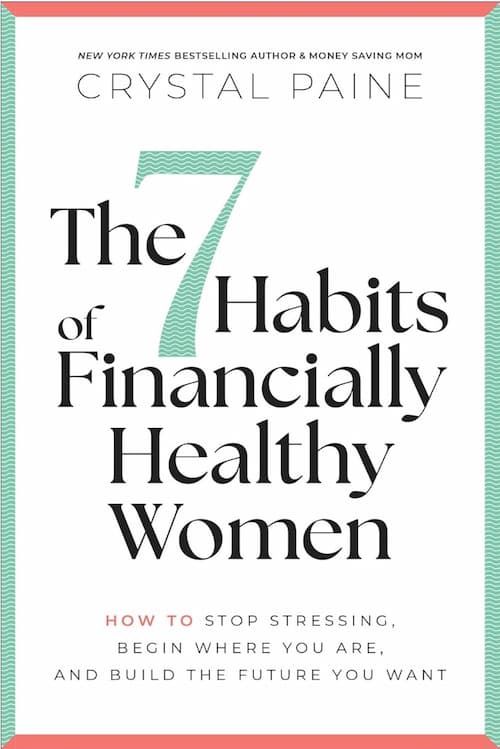
Book cover for The 7 Habits of Financially Healthy Women by Crystal Paine. The cover reads "NEW YORK TIMES BESTSELLING AUTHOR & MONEY SAVING MOM CRYSTAL PAINE," "The 7 Habits of Financially Healthy Women," and "HOW TO STOP STRESSING, BEGIN WHERE YOU ARE, AND BUILD THE FUTURE YOU WANT."

Want More Help Managing Your Money?

For more encouragement and ideas to save money, pre-order a copy of my new book, The 7 Habits of Financially Healthy Women.

This book is something I wrote for each and every woman. It’s for the woman in college, the married woman, the single woman, the mom with lots of kids, the woman who doesn’t have kids, the empty nester, and anything and everything in between.

It is part memoir (sharing so many stories of my upbringing and how my parents and grandparents influenced me when it comes to money + lots of stories from our early years of marriage) and it is part practical handbook.

It is packed with my best time-tested advice on how to change your financial future — one step at a time — written in a very realistic, down-to-earth, encouraging style.

Whether you are struggling and stressed or feel like you are in a good place financially and would just like to fine-tune things, The 7 Habits of Financially Healthy Women is for you.

More Inspiration to Save:

Which tip do you find most helpful for starting a savings plan? Share in the comments below!

 With these FREE Budget Goal Planning Worksheets, you’ll begin with the MOST IMPORTANT piece of goal-setting & then have space to track your steps!


Week 31: A Peek Into This Past Week (+ the books I finished this past week!)

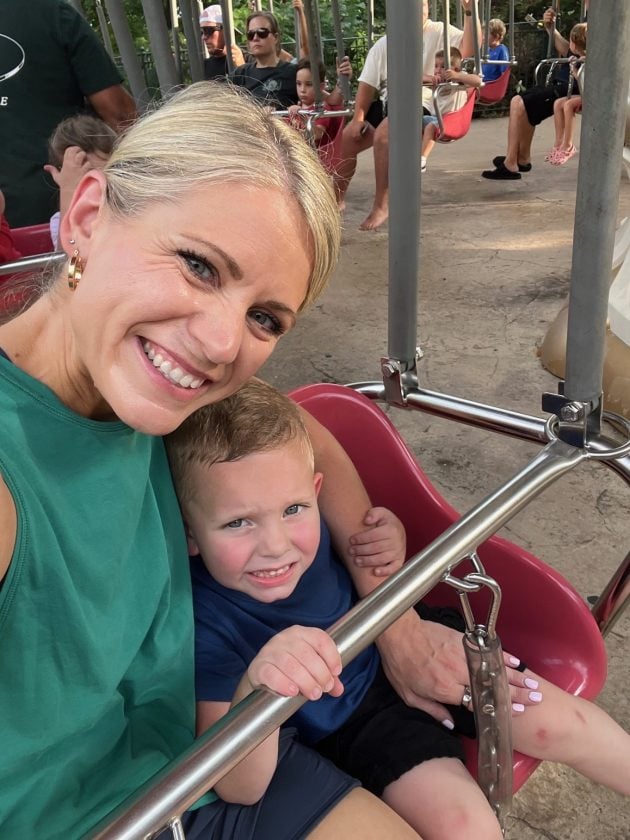
We went to Silver Dollar City last week (I shared more about this in last week’s Peek Into Our Week post). While there, Micah really wanted to ride the chair swing ride.

I’ll be honest… I was kind of concerned it would be too scary for him, but he met the height requirement as long as he rode with me. So I asked him a second time as we were walking up to the ride to verify that he wanted to ride.

He said emphatically that he did — and since I try hard not to bubble wrap my kids and want to say yes if at all possible when they want to try something — onto the ride we went.

When we got on, however, I felt like he was starting to second guess his decision. I could see the tug-o-war happening inside of him — he really wanted to ride but he was also feeling scared.

I reminded him that he had so much brave inside of him (something I tell him often) and that I’d be right there holding onto him.

The ride started and he started shaking.

I held him tighter and started saying over and over to him, “You have so much brave inside of you!” He was clinging onto me as we went higher and higher, but then I saw him slowly lift his head up and open his eyes a little.

And then…

A tiny smile appeared on his face.

I kept saying, “Wow! You’re doing it! You have so much brave inside of you. And his smile got bigger and bigger!  He was beaming with pride when he walked off the ride.

And it reminded me… As parents, it’s easy to want to protect our kids from all struggle and fear. And there is a time and place to protect our kids — when there is real danger, etc. 

But, often, our desire to protect them can go too far and we can actually keep them from getting to experience the joy and fulfillment that comes from facing fears and doing hard things. 

As much as is possible, let your kids try things — even if you think they’ll likely fail or that it might be challenging.

Struggle builds strength. 

Character is developed in the challenging times. And often the deepest fulfillment comes from facing hard things and not quitting.

Our kids are so often much braver, stronger, and more capable than we believe them to be — they just need us to say yes, believe in them, be there to remind them of the truth, and to be their biggest cheerleaders.

Also, if someone hasn’t told you recently, let me be the person to tell you — you are stronger than you think and you have so much brave inside of you! 

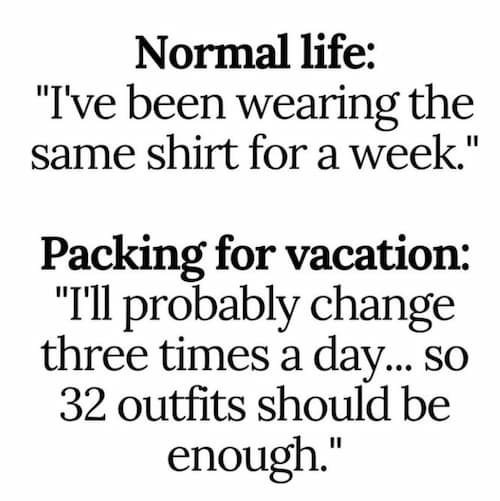
Anyone else transform into a full-on Boy Scout while packing for a road trip?

Like, what if we break down and have to live out of our car for three days?? Better pack 27 snacks, 8 outfits, and backup pajamas… just in case. 😅

Tell me I’m not the only one who packs like we’re prepping for the apocalypse. 🙃

I’ve been having really bad allergies for the last few weeks and have had to take a lot of medicine, which I typically try to avoid. So last Sunday I started trying something radical and I was honestly really hoping it wouldn’t make a difference. But I finally was like I gotta do something different to see if it’ll help.

A few days later someone asked me, “Crystal, how do you have so much energy?!” 

I thought, “oh no, I think it’s because of the change I made on Sunday.” 

Here’s what I did: I cut out white flour, processed sugar, and mostly all processed food.

I didn’t want it to work. I wanted to be like, “no! It doesn’t affect me at all!” But, y’all, it’s really shocked me how much of a difference it has made. I’m feeling SO much better and I’m like nooo!!! 🙂

Have you ever tried this? Has it made a difference for you? I’d love for you to comment and let me know your best tips — and maybe some encouragement that this change won’t make me so sad after I get used to it! 

What I’m Reading…

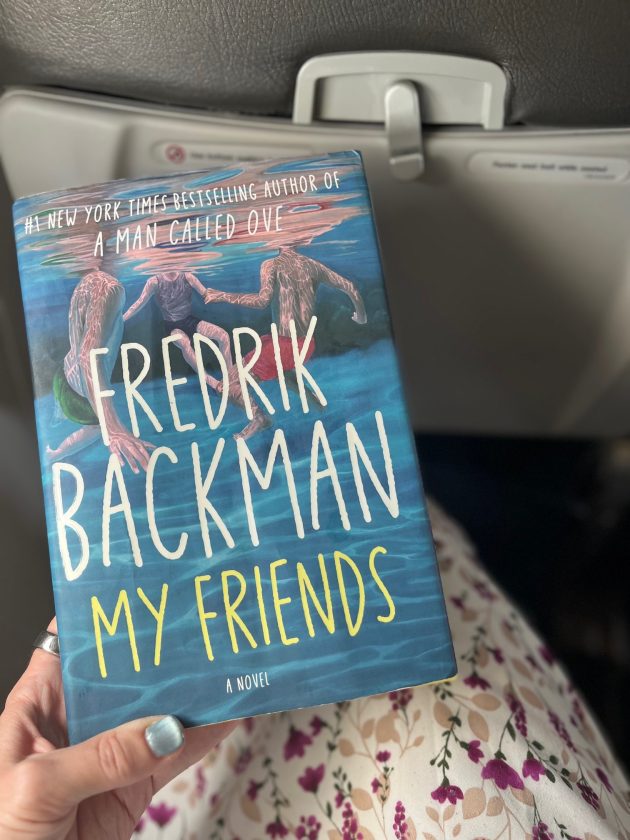
This week, I finished Rooted in Wonder (an encouraging book for moms if you want to help your kids get out into nature more!) and My Friends (This book has some really beautiful parts but also quite a bit of raw and gritty stuff in it including a lot of language. It came highly recommended to me by someone whose reviews I trust, but I’ll be honest, it was one of those books that I didn’t really get into. But I also couldn’t stop reading because so many parts and phrases really moved me and stuck with me. I liked A Man Called Ove by the same author a lot more, but this book was uniquely beautiful and tragic and such a good reminder that you never know what depths of pain and suffering and rejection and betrayal and heartache people have experienced.)

I’m also reading: Reimagining Church as Family, Capable (SOO good!), and I’m getting ready to start Take My Hand (which I’ve heard is really good).

  • Save Money Eating Out: 10 Family Meal Hacks at Popular Restaurants — Eating out doesn’t have to wreck your grocery budget! Discover 10 budget-friendly restaurants and simple ordering hacks that can help your family save money eating out. From sharing meals and family bundles to rewards programs and weekly specials, these practical tips make restaurant meals much more affordable.
  • The Best Apps to Make Money Reselling Your Stuff — Between clothes your kids outgrow in six months, home decor you no longer use, impulse purchases, and random items sitting in closets, there’s often money hiding in plain sight. This post highlights some of the best apps to make money reselling, plus details for selling successfully on these sites.
  • Easy Protein Recipes — Have you ever had one of those days where you feel like you’re constantly hungry, even though you just ate? If that sounds familiar, you might not actually need more food — you may need more protein. These budget-friendly and family-approved recipes will help you easily add more protein to your diet!
  • 20+ Easy Summer Recipes — Looking for easy summer dinner recipes the whole family will love? These simple, budget-friendly ideas are perfect for hot days when you don’t want to spend hours in the kitchen.
  • Watch David With His Birthday Piñata! — When we started fostering 8-month-old David, he was barely able to hold his head up and the doctors didn’t know if he would ever sit up or crawl. We weren’t even considering the possibility of him being able to walk at that point. For the last five years, we’ve gotten a piñata to celebrate him and honor his Guatemalan heritage, but this year was the first time he swung at it — and he hit it!!! Check out this video and rejoice with us! Watch out, world. Our miracle boy is just getting started!
   
 
Multicolored Divider